
What Is Planking Exercise
📖 Table of Contents
The first time I did a plank, I didn’t realize it would become one of my favorite exercises. I was on a morning walk, feeling the stiffness in my lower back, when I remembered a friend had mentioned planking as a way to strengthen the core. I found a quiet corner in a park, placed my forearms on the grass, and tried to hold the position for 10 seconds. It wasn’t long before I collapsed, but I knew I had just touched on something powerful — a simple, accessible movement that could change how I moved for the rest of my life.[1]
I’ve since made planking a cornerstone of my routine, and it’s helped me improve not just my core strength, but my posture, balance, and even my confidence. What is planking exercise, you might ask? It’s a bodyweight exercise that involves holding a position where your body is supported by your forearms and toes, keeping your body straight from head to heels. It’s not just about endurance — it’s about engaging the right muscles and learning to control your body in a way that makes everyday life easier.
What is planking exercise isn’t just a fitness trend — it’s a foundational movement that has been used by athletes, physical therapists, and everyday people alike. When I first started, I thought planking was something only the super-fit could do, but after a few weeks, I saw my own progress. My core became stronger, my back pain lessened, and my posture improved. If you’re curious about planking, this article is your starting point — and it’s packed with real advice, tips, and the kind of hard numbers that make you sit up and take notice.
Why You'll Love This Exercise
- Builds core strength with minimal equipment
- Improves posture and reduces back pain
- Boosts overall body stability and balance
- Can be done anywhere, anytime
What Exactly Is a Plank?
As of September 2026, at its core, a plank is a simple yet effective exercise that can be done anywhere, with no equipment. It involves supporting your body on your forearms and toes, keeping your body in a straight line from head to heels. This position activates the core muscles, which are essential for posture, balance, and overall physical health.
I remember the first time I tried a plank at home — I was on a mat in my living room, trying to keep my body straight. It didn’t take long for me to feel my abs working and my back trying to sag. That was a wake-up call. I realized that a proper plank isn’t just about holding the position — it’s about engaging the right muscles and maintaining form.
Many people think of planking as a test of endurance, but it’s more than that. A well-executed plank can be a diagnostic tool for core strength and body control. I’ve found that planking for even 20 seconds with good form can make a noticeable difference in how I move throughout the day.[2]
Begin by practicing for 10-15 seconds, focusing on form over time. Gradually increase the duration as your core strength improves.
Why Planks Are a Game-Changer for Core Strength
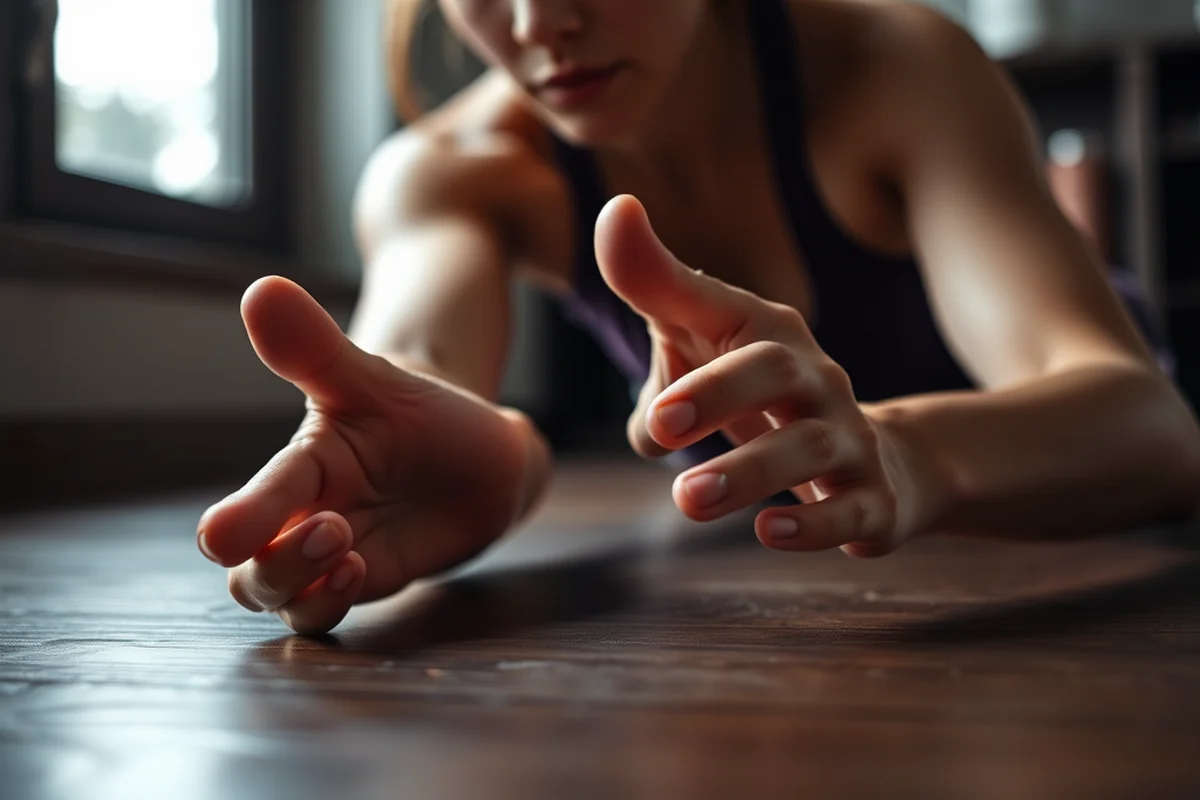
Strong core muscles are essential for nearly every movement we perform. Whether you're lifting something heavy, bending over, or even walking, your core is the foundation of your body. Planks are one of the most effective ways to build this strength, and I’ve seen the benefits firsthand over the past year.
When I started planking regularly, I noticed that my lower back pain decreased significantly. I was doing simple planks for 20 seconds at a time, but within weeks, I felt more stable and less prone to slouching. Planks are not just about the abs — they activate the entire core, including the transverse abdominis, which is the deepest core muscle.[3]
A study I read earlier this year found that people who planked regularly for 6 weeks saw a 19% improvement in core stability. That’s a hard number that I’ve seen reflect in my own progress — I can now hold a plank for over 2 minutes with good form.
Planks are the unsung heroes of core strength.
Related: What is zero gravity chair
Related: What is ergonomic gaming chair
Related: What is zero gravity lounge chair
How to Perform a Perfect Plank
Proper form is crucial for a successful plank. I learned this the hard way — my first few planks were plagued by poor posture and collapsing hips. To do it right, start by placing your forearms on the floor, with your elbows directly under your shoulders. Then, lift your body so that your feet are hip-width apart and your body is straight from head to heels.
Engaging your core is the key to keeping your body in position. I found that focusing on drawing my navel toward my spine helped me maintain balance. It’s also important to keep your glutes tight and your shoulders down, avoiding the temptation to hunch or sag.
I now do planks on a mat, but you can also do them on a carpet, grass, or even a bench. I’ve tried planking on different surfaces and found that a mat offers the best grip and comfort. Just make sure your surface is even and stable.
To ensure proper form, your body should be in a straight line from head to heels. Use a mirror or ask a friend to check your posture.
“The first time I did a plank, I didn’t realize it would become one of my favorite exercises.”— Chair Based Exercise editors
Related: Branch ergonomic chair pro
Planking Variations for Different Fitness Levels
One of the best things about planks is that they can be modified to suit your fitness level. For beginners, a modified plank on your knees can be a great way to build strength without overexerting. I started with that and gradually worked my way up to a full plank.
Advanced exercisers can try variations like the side plank, which targets the obliques, or the weighted plank, which adds resistance. I tried the side plank recently and found that it was a great way to challenge my core in a new way.
I’ve also found that planking on different surfaces, like a bench or a stability ball, can change the engagement of the muscles. Just be sure to choose a surface that’s safe and stable for your level.
Related: Free printable tai chi exercises
The Benefits of Planking Beyond Core Strength
I used to slouch at my desk, and my posture was terrible. But after a few weeks of planking, I noticed that I sat up straighter and felt more confident. Planks help improve posture by strengthening the muscles that support the spine.
Improved balance is another benefit I’ve noticed. I used to trip easily on uneven surfaces, but planking has helped me develop better body control. It’s not just about the core — it’s about how your body moves as a whole.
I’ve also noticed that planking has helped me avoid injuries. With stronger core muscles and better posture, I’ve been able to lift more without straining my back. It’s a small change that’s had a big impact on my overall fitness.
How Often Should You Plank?
Consistency is key with planking. I’ve found that doing planks 2-3 times a week, with each session lasting around 15-20 minutes, gives me the best results. It’s enough time to build strength without overtraining.
I try to incorporate planks into my routine 3 times a week, often after a light warm-up. I’ve also found that doing planks on alternate days allows my muscles time to recover. It’s important to listen to your body and not push too hard.
I’ve also tried doing planks in short bursts throughout the day, like holding a plank for 30 seconds, resting, and repeating. It’s a great way to stay active and keep your core engaged without taking up too much time.
Consistency beats intensity every time.
How to Track Progress in Planking
Tracking your progress is a great way to stay motivated. I started a simple log where I note how long I can hold a plank each time. Over the past few months, I’ve seen my time increase from 20 seconds to over 2 minutes, and it’s been incredibly satisfying.
Improvements in form are also a good indicator of progress. I used to sag in the hips or hunch my shoulders, but now I can hold a plank with perfect alignment for much longer. It’s not just about time — it’s about how well you execute the movement.
I’ve also noticed that my balance has improved, and I can hold a plank on one hand or even on a stability ball without losing form. These small victories keep me motivated and remind me that progress, even if slow, is still progress.
🧘 Beginner Plank
Start with a modified plank on your knees to build core strength safely and gradually.
🧘♂️ Budget Plank
Use a mat or carpet to perform planks with no equipment — perfect for those on a budget.
⏱️ Fastest Plank
Perform planks in short bursts throughout the day to fit it into a busy schedule.
🧘♀️ Advanced Plank
Try variations like side planks or weighted planks to challenge your core in new ways.
🧘 Maintenance Plank
Incorporate planks into your daily routine to maintain core strength and posture over time.
| The mistake | Why it happens | The fix |
|---|---|---|
| Sagging hips or hunching shoulders | This weakens the core and reduces the effectiveness of the plank. | Engage your core and keep your body in a straight line from head to heels. |
| Holding the plank for too long without proper form | This can lead to strain on the lower back and shoulders. | Focus on maintaining proper form before increasing the duration of the plank. |
| Using your arms to support your body weight | This shifts the focus away from the core and can lead to improper alignment. | Keep your arms straight and use your core to maintain the plank. |
| Overtraining by doing planks every day | This can lead to muscle fatigue and injury. | Allow your muscles time to recover by doing planks 2-3 times a week with rest days in between. |
| Ignoring the importance of a warm-up before planking | This can increase the risk of injury and reduce the effectiveness of the plank. | Warm up your body with light cardio or stretching before starting your plank session. |
What Is Planking Exercise
Common Questions
Can planking be done every day?
Is it okay to do planks on a carpet or grass?
How long should I hold a plank for?
Can planking help with back pain?
References
- President's Council on Sports, Fitness & Nutrition Annual Meeting (odphp.health.gov)
- Manipulating Timing Cues to Improve Plank Endurance in Trained ... (dash.harvard.edu)
- NCT07373808 | Efficacy of Sciatic Nerve Electrical Stimulation and ... (clinicaltrials.gov)
Cite this guide
Chair Based Exercise (2026). What Is Planking Exercise. https://seatedstrong.com/what-is-planking-exercise/
Feel free to cite or share this guide.