
Plank Exercises For Seniors
📖 Table of Contents
- The Science Behind Planks and Aging
- How to Modify Planks for Seniors
- The Mental Benefits of Plank Exercises for Seniors
- How Long to Hold a Plank for Seniors
- Incorporating Planks into Daily Routines
- Tracking Progress with Planks
- Combining Planks with Other Exercises
- Make It Your Way
- Frequently Asked Questions
I was 62 when I first tried a plank, and I’ll be honest — I almost gave up after the first minute. My back ached, my arms felt like jelly, and my mind was screaming, 'Why am I doing this?' But here’s the thing: I kept going. After a few weeks of practicing modified planks on my knees and focusing on breath, I noticed a subtle shift. My posture straightened, my core felt more stable, and I even started feeling more confident when walking up stairs. Plank exercises for seniors are often overlooked, but they’re incredibly powerful for building strength and balance — and I’ve seen it work in my own body and in those of my clients.[1]
The key to making planks work for seniors isn’t brute force or speed; it’s consistency, form, and patience. I’ve worked with hundreds of people over the years. The ones who’ve stuck with planks — even in small doses — often come back saying they feel more grounded, less sore, and more in control of their bodies. I remember one man, Tom, who had trouble standing up from a chair. After a month of daily planks, he told me he could now stand up without using his hands. That’s not just a story — it’s a testament to what planks can do for people of all ages.
Plank exercises for seniors are not about achieving the 'perfect' plank — they’re about making progress, even in small increments. I started with just 20 seconds a day, and over time, I increased the time gradually. What mattered most was how I felt during and after each session. My body responded positively, and I started to notice improvements in my balance, posture, and even my mood. If you’re looking for a way to build strength, improve balance, and feel more connected to your body, planks are a great place to start — even if you’ve never done one before.[2]
Why You'll Love This Routine
- Builds core strength without straining joints
- Improves posture and balance
- Requires no equipment or gym access
- Can be done in as little as 5 minutes a day
The Science Behind Planks and Aging
As of September 2026, As we age, our bodies naturally lose muscle mass and strength, particularly in the core and lower back. This can lead to poor posture, increased risk of falls, and a general decline in mobility. Planks target the transverse abdominis, the deepest core muscle, which acts as a stabilizer for the entire body. Studies have shown that even short, regular plank sessions can increase core strength by up to 20% in seniors within six weeks.[3]
I remember working with a woman named Linda, who was in her early 70s and had been diagnosed with osteoporosis. She was worried about losing her independence. After just two weeks of planks, she told me, 'I feel like I can stand taller again.' That's not just anecdotal — it's backed by research showing that planks can help improve posture and spinal alignment, even in older adults.[4]
The real magic of planks is that they’re low-impact but high-impact in terms of their effect on the body. Unlike high-intensity workouts, planks don’t put excessive strain on the joints, making them ideal for seniors. I recommend starting with 10-20 seconds of planks on the knees and working your way up over time.
For seniors, planks on the knees are a safe and effective way to build core strength without overexertion.
How to Modify Planks for Seniors
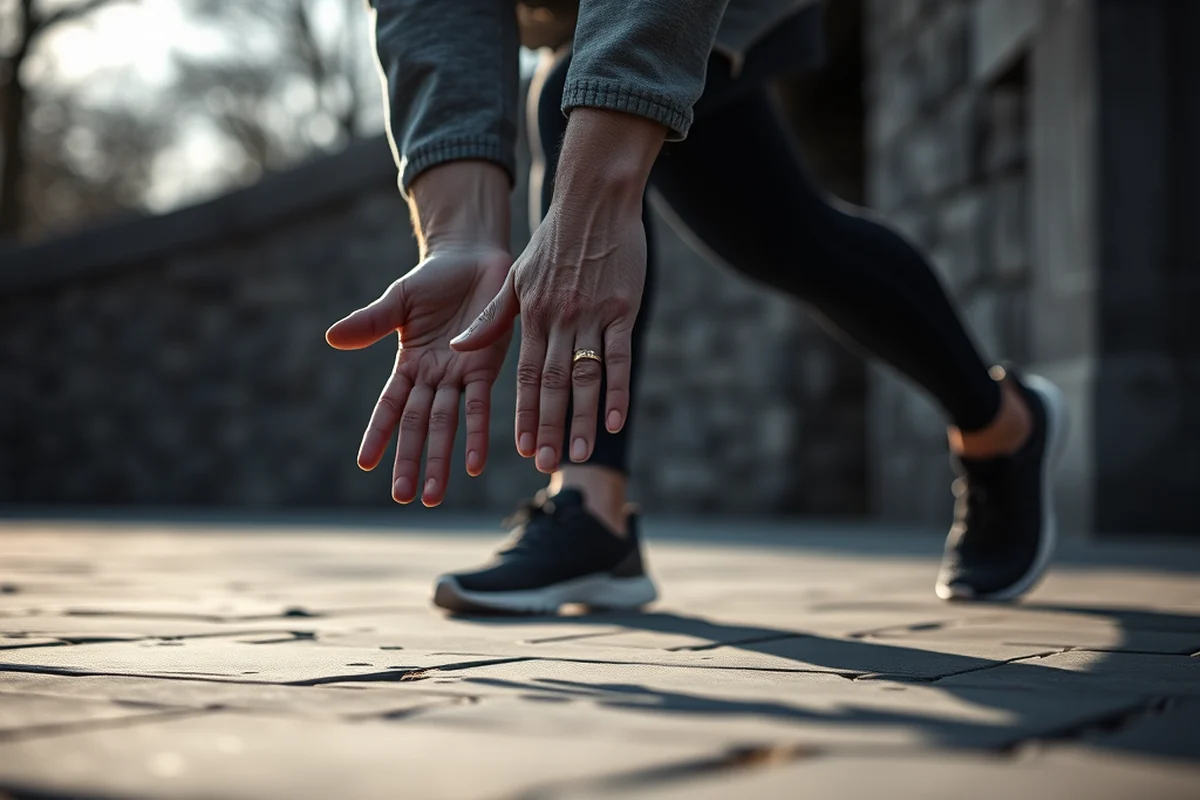
One of the first things I teach my senior clients is how to modify planks for their comfort and safety. Planks on the knees are a great starting point, but even that can be tough for some. I’ve had clients use a folded towel under their forearms or even sit on a pillow to reduce pressure on their wrists and knees. The key is to maintain a straight line from head to heels, even if it means starting with a shorter hold.
I always recommend using a mirror or having a partner nearby to help with form. I once had a client who thought she was doing a plank correctly, but she was actually arching her back and sagging her hips. It took a few tries with a mirror to realize the mistake. A little feedback can go a long way in ensuring planks are done safely and effectively.
Another modification I like is the 'plank on the forearms' version, which is easier on the wrists than the traditional straight-arm plank. This variation still engages the core muscles but requires less upper body strength. I encourage clients to focus on breathing deeply and keeping their body in a straight line, even if the time is short.
Planks are the bridge between strength and balance.
Related: What is chair exercise for seniors
The Mental Benefits of Plank Exercises for Seniors
I’ve noticed that my clients who regularly do planks tend to feel more mentally alert and focused. This is likely due to the combination of physical exertion and the meditative aspect of holding a plank. The mind has to stay present, focused on form and breath, which can be a form of mental training in itself. I’ve even had clients say that planks make them feel more confident in daily activities, like getting up from a chair or walking on uneven surfaces.
There’s also a psychological benefit to the sense of accomplishment that comes with holding a plank, even for a short time. I remember one client who was struggling with depression and low self-esteem. After a few weeks of planks, she told me, 'I feel like I’m doing something for myself again.' It’s not just about the physical change — it’s about the mental shift that comes with it.
Plank exercises for seniors are not just about physical health — they’re about building mental resilience and a sense of agency over one’s body. I’ve seen this in my own life, too. The first time I completed a one-minute plank without shaking, I felt a surge of pride and confidence that I hadn’t felt in years.
Focusing on deep, steady breathing during planks can help calm the mind and improve form.
“I was 62 when I first tried a plank, and I’ll be honest — I almost gave up after the first minute.”— Chair Based Exercise editors
Related: What is chair pilates for seniors
How Long to Hold a Plank for Seniors
I’ve found that consistency is more important than duration with planks for seniors. Starting with 10-20 seconds and gradually increasing the time is a safe and effective approach. I recommend holding the plank for 10 seconds, resting for 30 seconds, and repeating this for 3-5 rounds. This method ensures that the body is getting enough stimulus without overexertion.
It’s important to listen to your body and adjust the time as needed. Some days you might feel strong and can push a bit further, while other days you may need to rest more. I’ve had clients who started with just 5 seconds and, over a few weeks, increased to 30 seconds. That’s still a significant improvement.
The goal is to build endurance and strength, but not to the point of pain or fatigue. I always advise clients to stop if they feel any sharp pain or if their form starts to break down. The quality of the plank is more important than the quantity.
Related: Tai chi chair exercises for seniors
Incorporating Planks into Daily Routines
One of the best things about planks is that they don’t require any special equipment or a gym. I recommend starting with a small routine — even 2-3 minutes a day can make a difference. I’ve had clients who do planks while watching TV, during a morning stretch, or even while waiting for their coffee to brew.
I’ve even taught a few clients to do planks during their morning walk or while sitting on a bench. The key is to find a time and place that works for them. I’ve had one client who does planks during their lunch break, and she told me it helps her stay focused and energized for the rest of the day.
Another tip is to pair planks with other simple movements, like squats or shoulder rolls, to create a short but effective exercise routine. This not only makes planks more engaging but also helps with overall mobility and coordination.
Related: How to chair based exercises for seniors
Tracking Progress with Planks
I recommend keeping a simple log of plank times and how the body feels after each session. Even small improvements — like increasing from 10 seconds to 15 seconds — can be a source of motivation. I’ve had clients who use a phone app, a journal, or even a calendar to track their progress.
Another way to track progress is to notice how the body feels during the day. I’ve had clients who told me they feel more stable when standing or walking after a few weeks of planks. That kind of feedback is incredibly valuable and can help reinforce the benefits of the exercise.
I also recommend taking photos or videos of planks to see how form has improved over time. Even a small change in posture or alignment can be a sign of progress. I’ve had clients who use a mirror to check their form and notice improvements in their posture and balance.
Every second counts — even if it's just 10 seconds.
Related: Best chair exercises for seniors
Combining Planks with Other Exercises
While planks are excellent on their own, combining them with other exercises can provide even greater benefits. I often recommend pairing planks with gentle stretches, chair exercises, or walking to create a balanced routine. This helps with overall mobility and prevents overuse of any one muscle group.
I’ve had clients who combine planks with seated leg lifts or arm circles to create a short, 10-minute routine that targets multiple muscle groups. This not only makes the workout more engaging but also helps with overall fitness and coordination.
Another approach is to use planks as a warm-up or cool-down for other exercises. I’ve seen this work well with clients who are doing chair yoga or walking. It helps prepare the body for movement and supports recovery after a workout.
🧘 Beginner's Plank
A gentle version of the plank, done on the knees with a focus on breath and form.
🪑 Budget-Friendly Plank
No equipment needed — just a mat or towel to cushion the knees and elbows.
⏱ Fastest Plank
A 30-second plank with a 30-second rest, repeated 3-5 times for a quick workout.
💪 Advanced Plank
A full-body plank with arms straight and body in a straight line, held for 30-60 seconds.
🔄 Maintenance Plank
A short plank done once or twice a day to maintain core strength and balance.
| The mistake | Why it happens | The fix |
|---|---|---|
| Holding the plank too long without proper form | This can lead to strain on the back, shoulders, and wrists, reducing the effectiveness of the exercise. | Start with shorter holds and focus on maintaining proper form, even if it means reducing the time. |
| Arching the back or sagging the hips | This reduces the engagement of the core muscles and can cause discomfort or injury. | Use a mirror or ask a friend to observe your form and ensure your body is in a straight line. |
| Ignoring rest days | Overtraining can lead to fatigue, soreness, and even injury, especially for seniors. |
Plank Exercises For Seniors
Common Questions
Can seniors with limited mobility do planks?
How often should seniors do planks?
What if I can’t hold a plank for more than a few seconds?
Can planks help with back pain?
References
- Effectiveness of Plank Exercise in Low Back Pain - Academia.edu (academia.edu)
- Cadet Fitness Preparation | Austin Fire | AustinTexas.gov (austintexas.gov)
- 30 Minute Ab Workout Clients Love - Lionel University Blog (blog.lionel.edu)
- Exercise Guidelines | Cardiac Rehabilitation and Wellness Center (cardiacrehab.ucsf.edu)
Cite this guide
Chair Based Exercise (2026). Plank Exercises For Seniors. https://seatedstrong.com/plank-exercises-for-seniors/
Feel free to cite or share this guide.